
Kenyan Media Players Turn to Co-Design to Tackle Election Misinformation
By Victoria Musimbi
As misinformation continues to threaten the integrity of civic information ahead of Kenya’s next elections, Baraza Media Lab (BML), in partnership with the Mozilla Foundation, is exploring a technology-based solution by bringing journalists, content creators, fact-checkers and technology experts together to co-design a tool that could strengthen information verification.
The initiative centres on Bias Lens, a proposed tool designed to address misinformation, particularly in the context of elections. Rather than developing the technology independently and presenting it to users after completion, the team is involving its intended users from the outset.
The approach was discussed during a Co-Design Lab that brought together people from different parts of the information ecosystem to share their experiences, challenges and needs when identifying and responding to misleading information.
Delphine Nyaboke, a machine learning and software engineer and Mozilla Fellow embedded by Baraza Media Lab, said the engagement was important because technology developers do not always understand the processes followed by journalists, content creators and fact-checkers.
“The main aim was to bring these different groups together because, although I have a bachelor’s degree in electrical engineering from JKUAT and a Master of Science in Engineering in Artificial Intelligence, I have little to no understanding of the processes that journalists, content creators and fact-checkers go through,” Nyaboke said.
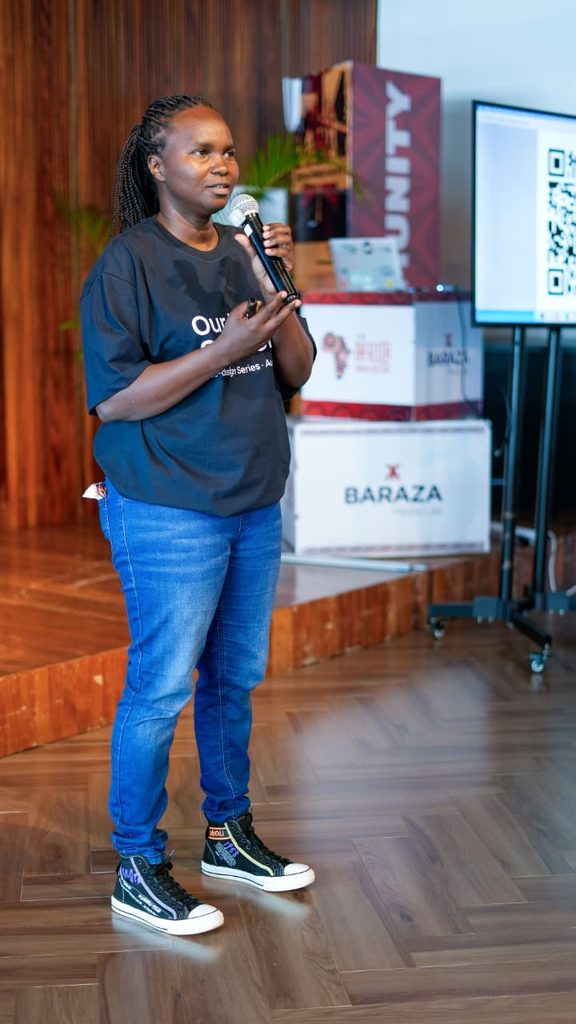
The session enabled the team to understand their workflows and pain points before development of Bias Lens begins.
Nyaboke said the team plans to start building the tool in September after gathering feedback from potential users. This will be followed by user testing, with participants expected to assess the tool and provide additional feedback.
“We do not want to surprise people with a completed product and ask, ‘What do you think?’ Instead, the tool will be built collectively, with users involved at every stage,” she said.
The project will also involve data annotation experts, including journalists, content creators and fact-checkers, who will be compensated for their time and contribution.
The co-design process will continue through additional hackathons in Nakuru, Mombasa and Kisumu, where the team will gather perspectives from different parts of the country before development begins.
Nyaboke noted that ideas, concerns and experiences shared during the sessions will inform the development of Bias Lens.
The tool is expected to be launched at the Africa Media Festival, potentially providing journalists, content creators and fact-checkers with another resource for navigating Kenya’s increasingly complex information environment.
Building solutions for a changing media landscape
Marion Anvango, Research Manager at Baraza Media Lab, said the organisation is bringing together people from the media and technology sectors to develop solutions to emerging challenges in the media and creative industries.
Artificial intelligence is already transforming the sector, creating opportunities while also raising concerns about job displacement, copyright and the use of creatives’ work to train AI systems.
“We have been thinking about building solutions because AI technology is here to stay and it makes our lives easier. But at the same time, it can also create challenges,” Anvango said.
According to Anvango, the Bias Lens project is focused on misinformation ahead of the next elections and will seek to complement, rather than duplicate, existing tools within the information integrity ecosystem.
Baraza Media Lab is engaging organisations including Africa Check and Code for Africa to identify existing tools, gaps and opportunities for collaboration.
The changing ways in which Kenyans consume civic information have also made it important to involve content creators in efforts to combat misinformation.
“Civic information has really evolved. Now most people are getting their news from not the traditional media, but from TikTok and Instagram,” she said.
Anvango noted that content creators therefore need access to verification skills and tools traditionally associated with journalists and fact-checkers.
However, technology alone cannot address misinformation, particularly as Kenya approaches another election.
The initiative is also linked to Baraza Media Lab’s Fumbua programme, which focuses on tackling misinformation and disinformation. Anvango called for greater public awareness and media literacy to help people identify and respond to manipulated or misleading information.
“Before sharing something, cross-check it,” she said, emphasising the need to prepare the public, journalists and civic content creators to recognise and responsibly handle misinformation.
