
The people tasked with holding power accountable and shaping our national discourse are struggling to survive- Queenter Mbori, Executive Director, AMWIK
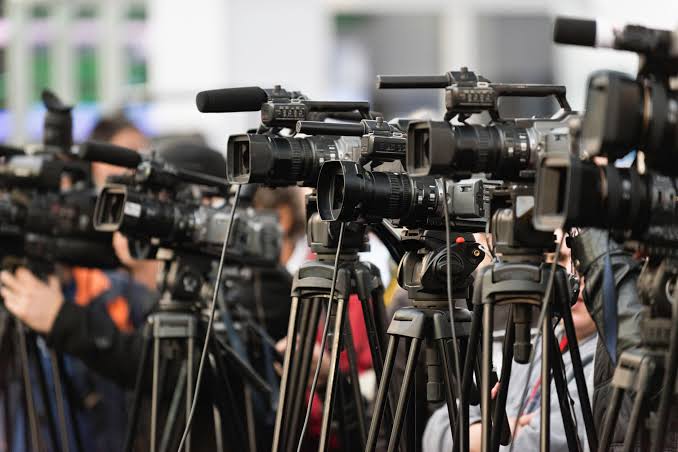
Across local newsrooms and international platforms alike, Kenyan journalists have continuously braved daunting odds to deliver truth to power.
Their grit, courage, and relentless dedication paint a powerful picture of resilience, proving time and again that the spirit of Kenyan journalism remains unbowed even in the face of immense adversity.
Yet beneath this remarkable resolve lies a dangerous, systemic paradox: The people tasked with holding power accountable, breaking critical news, and shaping our national discourse are struggling to survive. Simply put, our journalists are broke.
Behind the polished prime-time broadcasts and the digital updates lies a workforce grappling with deep financial troubles. These are the editors, reporters, correspondents, and freelancers who keep the newsrooms running.
The Reuters Institute’s Digital News Report 2026 paints a stark picture of the structural pressures facing global media. Advertising revenues have hemorrhaged to global tech platforms, leaving local legacy media starved of capital.
Meanwhile, audience habits have shifted irreversibly. According to the Media Council of Kenya’s (MCK) State of the Media Report 2025/2026, print readership has collapsed to a mere 13%, and 39% of Kenyans now cite social media as their primary news source, officially overtaking television. Kenyan audiences haven’t abandoned professional news, but they are consuming it on platforms that newsrooms do not own and cannot easily monetize. When media houses lack revenue, the first casualties are journalists, with retrenchments, slashed correspondent rates, and shaky contracts.
Compounding this is a crippling debt: delayed government advertising payments amounting to over Sh833 million have severely restricted liquidity in the sector.
While the financial crisis affects the entire industry, it exacts a disproportionate toll on women. The Association of Media Women in Kenya (AMWIK) recently laid this bare in its inaugural State of Women in Media in Kenya (2026) report.
According to the report, only 14 per cent of women journalists hold permanent, full-time positions. The vast majority are relegated to the fringes of job security: 26.2 per cent are on fixed-term contracts, while a staggering 59.5 per cent are trapped in vulnerable roles as interns, freelancers, or correspondents.
When a journalist is paid per published story, often at dismal rates that take months to clear, they cannot plan for the future. The AMWIK report highlights that nearly 40 per cent of women in the industry report severe stress and anxiety directly linked to pay gaps and economic inequality. This financial vulnerability makes women more susceptible to workplace harassment and forces a devastating mid-career attrition rate. We are losing talented, experienced women who are forced to choose between poverty in the newsroom and stability elsewhere.
As if economic hardship were not enough, journalists are forced to contend with an increasingly hostile and dangerous physical environment. The recent violent assaults on journalists during the Ol Kalou by-election clearly demonstrate the extreme perils of the job. Masked, armed goons attacked media crews, including NTV journalists Brigitte Ngana, George Kieru, and Fiona Akinyi, robbing them of phones and cameras, lobbing teargas, and physically assaulting them simply for doing their work. When newsrooms lack resources, many reporters are sent into high-risk election environments without adequate security, protective gear, or comprehensive medical cover, exposing them to physical violence alongside financial insecurity.
In response to this alarming trend, the Kenya Media Sector Working Group (KMSWG), a coalition of key media stakeholders, including AMWIK, recently held a joint press conference to demand urgent state and industry action. KMSWG called for immediate government protection against state-sponsored violence and hired political goons, full compensation for injured journalists, and swift prosecution of police and perpetrators targeting the press. Crucially, the working group also urged media owners to safeguard workers’ livelihoods and physical well-being, reiterating that sending underpaid journalists into volatile environments without safety nets is unacceptable.
We cannot sustain a healthy democracy on the backs of unpaid, underpaid, and targeted journalists. To fix this, we need immediate, structural interventions.
First, the government must immediately release the over Sh833 million owed to media houses for advertising to offset active pending bills. Injecting this liquidity into the sector is a necessary first step to stabilize operations. In addition, media owners should exercise goodwill and the rule of law to prioritize and ensure journalists are paid on time.
Media houses must adopt fair, standardized minimum rates for correspondents and freelancers. If a story is valuable enough to publish, the journalist is valuable enough to be paid a living wage.
Media houses must also urgently diversify their revenue streams. Relying on traditional advertising is a failing strategy. Newsrooms must explore paywalls for premium content, donor-funded investigative desks, and direct audience monetization to fund the journalism Kenyans still highly trust.
As AMWIK advocates, journalists must be supported in becoming versatile, digital-first professionals. Media practitioners need the skills and digital security to build and own their content spaces, ensuring they can thrive even when traditional newsroom jobs are scarce.
Media owners and regulators must also enforce policies that protect vulnerable workers, close the gender pay gap, and create safe, inclusive environments that retain women in mid-career and leadership roles. They should also provide financial literacy training to their staff to ensure prudent use of available resources.
Kenya’s media is evolving, and as we navigate this transition, we cannot leave the journalists behind. It is time to move beyond the rhetoric of passion for the craft and demand economic dignity and physical safety for the Fourth Estate. A broke and unsafe journalist is a vulnerable journalist, and a vulnerable press is a threat to us all.
Queenter Mbori is the Executive Director of AMWIK
