
AMWIK AND UNESCO EQUIP 60 WOMEN JOURNALISTS WITH CRUCIAL DIGITAL SAFETY SKILLS
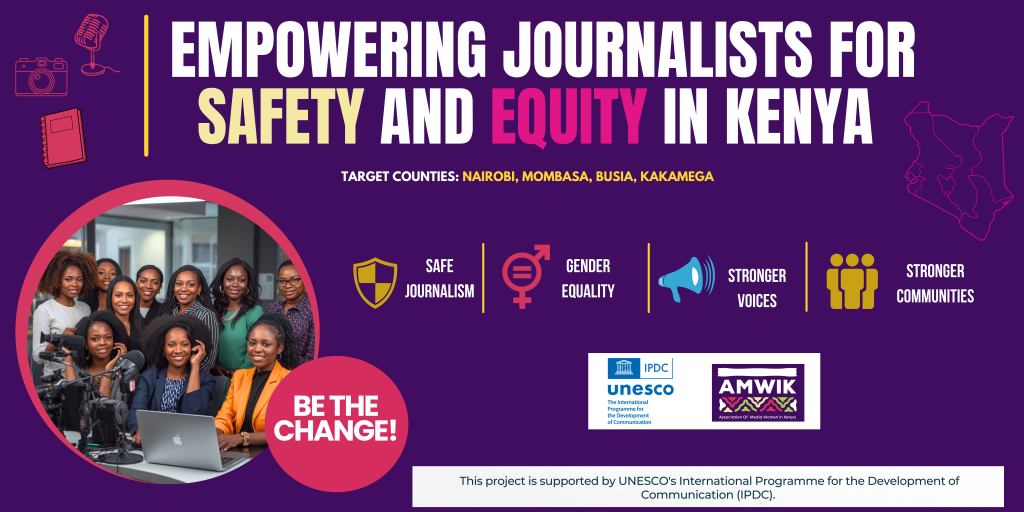
The Association of Media Women in Kenya through the support of UNESCO’s International Programme for the Development of Communication (IPDC), brought together 60 women journalists for an intensive two-day virtual training executed across two cohorts from July 20 to 23 2026. The initiative undertaken under the project titled Empowering Journalists for Safety and Equity in Kenya, focused on turning practical digital defenses into vital survival tools for modern reporters.
Opening the forum, Executive Director Queenter Mbori and UNESCO representative Sylvia Adongo laid bare the stark structural realities facing today’s media landscape. Drawing from recent industry research, Mbori pointed out a dramatic demographic shift – while four out of every five new entrants to Kenya’s media sector are women, approximately 70 percent are under 35 years old, and a staggering 95 percent work as freelancers. This freelance reality leaves most women reporters operating without institutional safety nets, formal legal backup, or technical support.
Compounding these structural gaps, findings from human rights organizations including a joint study by AMWIK and Article 19 Eastern Africa reveal that 75 percent of women journalists in Kenya have experienced online harassment in the course of their work. This local trend closely mirrors global data from UNESCO’s The Chilling report, which found that 73 percent of women journalists surveyed worldwide have faced online violence. Despite these alarming figures, only 4.7 percent of local media houses possess formal ICT and digital safety policies to guide their staff. The constant exposure to abusive messages and privacy threats has driven 43 percent of media practitioners to severe emotional burnout and anxiety.
Considering these challenges, Mbori emphasized that digital security is no longer just a technical issue, but a fundamental prerequisite for press freedom and personal survival. Echoing her urgency, Adongo urged newsroom managers to treat journalist safety as an institutional responsibility and called for integrating digital risk assessments directly into journalism education and newsroom workflows.
Led by lead digital security trainer Lourdes Walusala, the workshop steered away from theoretical concepts to guide participants through nine comprehensive modules covering everything from password security to online gender-based violence and digital wellbeing. Combining presentations, breakout case studies, and an interactive Kahoot quiz, the training tackled real-world newsroom scenarios. Journalists worked together to map out threats and secure sensitive documents for investigative assignments, manage physical risks like location tracking, and mitigate hardware theft involving laptops loaded with work files, banking details, and whistleblower data. Additional sessions demystified spyware, phishing schemes, doxxing, and impersonation campaigns designed to undermine professional credibility.
Participants put their learning into immediate practice by completing live setup sessions directly on their own devices. By the end of the training, reporters had enabled Multi-Factor Authentication across their accounts, deployed password managers, reviewed device security checklists, and configured full-disk encryption alongside remote-wipe settings on their laptops and phones.
To combat online abuse effectively, the workshop also trained journalists in legal evidence preservation, teaching them how to archive abusive messages and log digital metadata to support formal legal or institutional complaints. Recognizing that safety extends to mental health, the final sessions addressed digital fatigue and established peer-support networks to help reporters manage burnout. Each journalist departed with a personalized Digital Safety Commitment outlining concrete habits for their ongoing reporting, including routine risk assessments, regular data backups, and cautious social media practices.
By equipping reporters with the technical knowledge to protect their sources, secure their devices, and safeguard their mental well-being, this initiative by AMWIK and UNESCO marks a vital step forward in ensuring that Kenya’s women journalists can continue telling essential stories without endangering their safety.
END
About the Association of Media Women in Kenya
The Association of Media Women in Kenya (AMWIK) is a National Media Association established in 1982 and registered under the Societies Act as a non-profit membership organization for women journalists from the print, electronic media and other areas of communication. AMWIK’s vision is a just society in which the media embraces and promotes equitable development and human rights. AMWIK’s mission is to use the media to promote an informed and gender-responsive society through professional and transformative media.
About UNESCO IPDC
The UNESCO International Programme for the Development of Communication (IPDC) is the only multilateral forum within the UN system designed to mobilize the international community around media development issues. Created in 1980, the Programme promotes media development within developing countries and those in transition, conflict and post-conflict situations. The Programme also provides support for media projects while seeking global understanding in development of best practices to secure a healthy environment for the growth of free and pluralistic press.
