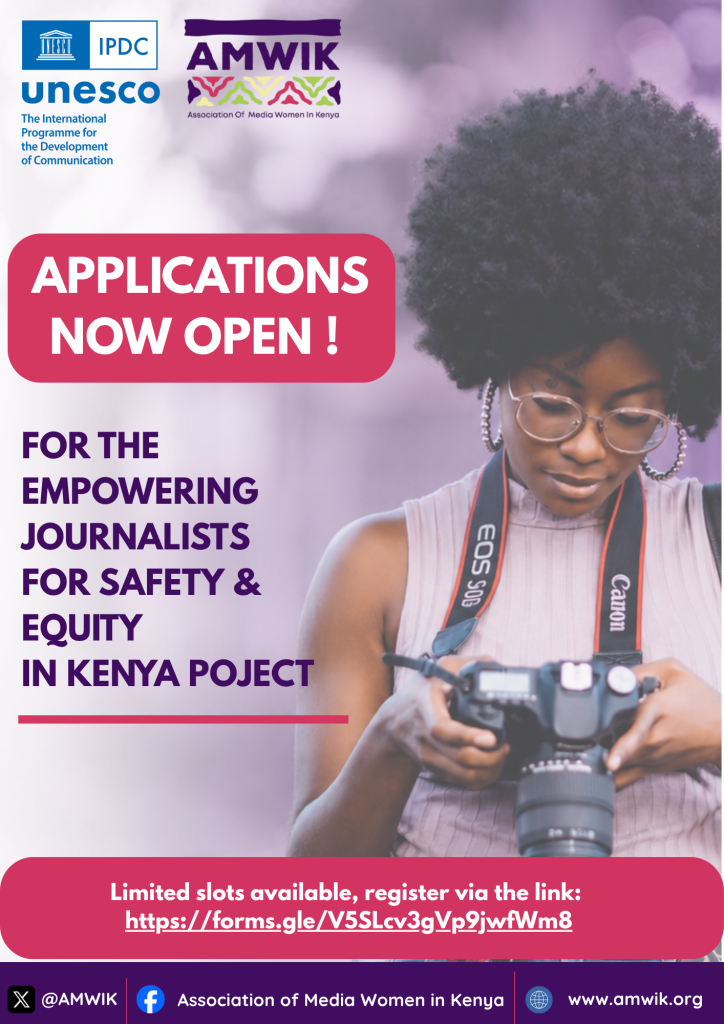
AMWIK AND UNESCO LAUNCH SAFETY INITIATIVE FOR FEMALE JOURNALISTS – How to apply
By Faith Kemuma
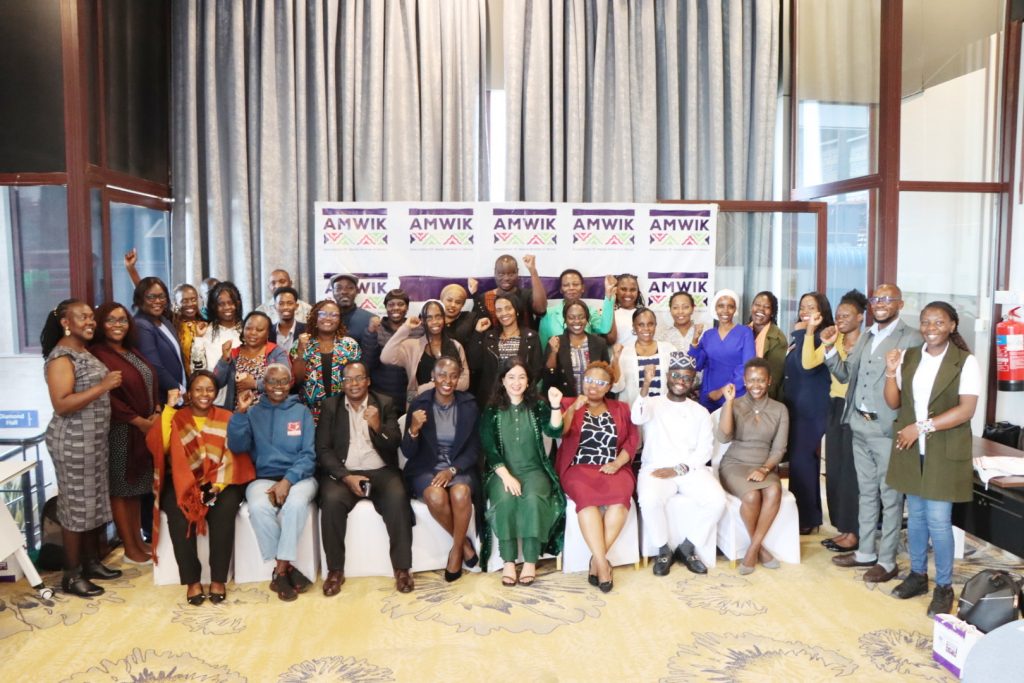
Ahead of the 2027 general elections, the Association of Media Women in Kenya (AMWIK) and UNESCO’s International Programme for the Development of Communication (IPDC) have launched a joint initiative to improve the safety and working conditions of female journalists.
Launched on July 3, 2026, in Nairobi, the Empowering Journalists for Safety and Equity in Kenya project will train 60 female journalists across Nairobi, Mombasa, Busia, and Kakamega. The program will focus on digital safety training, mental health support, and advocating for strict sexual harassment policies within newsrooms.
During the launch event, the immediate physical risks facing the press were highlighted by a video testimony from broadcast journalist Catherine Wanjeri Kariuki. Kariuki recounted the physical and mental toll of being shot with rubber bullets while covering the recent anti-Finance Bill protests, noting that she was wearing a clearly marked press vest at the time of the incident.
AMWIK Executive Director Queenter Mbori stated that Kariuki’s experience is a stark reminder of the physical dangers reporters face in the field. Mbori noted that these safety concerns are compounded by structural barriers within the industry, as documented in AMWIK’s newly released 2026 Status of Women in Kenyan Media Report.
These barriers are evident in newsroom leadership data. According to statistics from the Media Council of Kenya (MCK), while women comprise 40% of the media workforce, they hold only 20% of editorial leadership roles. Rebecca Mutiso, representing MCK CEO David Omwoyo, observed that the absence of women at decision-making tables often delays the development and enforcement of workplace harassment and field security policies.
Stakeholders at the event called for a shift from issuing routine statements of condemnation to taking actionable steps to protect journalists. Kenya Union of Journalists (KUJ) Secretary General Eric Oduor raised concerns about political actors targeting reporters in the lead-up to the next election cycle. Furthermore, Tom Mboya of the Kenya Community Media Network (KCOMNET) highlighted the distinct vulnerabilities of grassroots female journalists. Living in the volatile communities they cover, these reporters often face pressure to self-censor without the institutional backing of major commercial outlets.
Judie Kaberia, Senior Project Manager at the Friedrich Naumann Foundation (FNF), emphasized that workplace security must be treated as a fundamental requirement for journalism. She urged stakeholders to form a legal alliance with the Law Society of Kenya to ensure those who attack journalists are prosecuted.
The launch concluded with several institutional commitments to address the crisis. The MCK announced it is transitioning its manual press-violation reporting system into an online tracking platform, which will allow journalists to monitor the progress of their cases. The Council is also designing election coverage guidelines that will include tailored safety training for female reporters.
Additionally, the gathered stakeholders outlined key directives for the industry: media houses must enforce zero-tolerance harassment policies and provide psychological counseling; the government should consider linking broadcast licensing to gender-equality compliance; and universities need to modernize their journalism curricula to include safety protocols and emerging digital skills.
Apply as one of the 60 female journalists across the mentioned Counties using the link below.
Link: https://forms.gle/s7zNFyBfzDTtRXgE9
Best wishes!