
By Mary Nabwire- AMWIK Programs Assistant
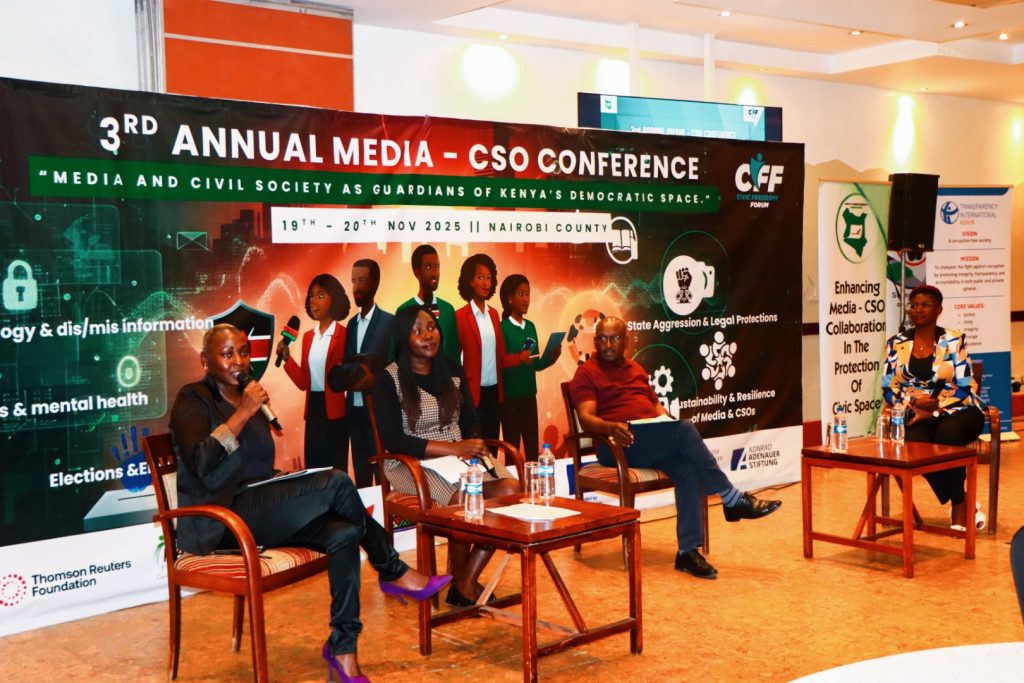
The Association of Media Women in Kenya (AMWIK) has issued an urgent call for robust collaboration between media houses and civil society organizations (CSOs) to fortify the safety and well-being of journalists nationwide, with a focused lens on dismantling persistent gender-based challenges in the industry. This message was delivered during the 3rd Annual Media-CSO Conference in Nairobi.
AMWIK Executive Director, Queenter Mbori, delivered an address, confronting the harsh realities faced by women in media. She asserted that women in the profession today not only lack safety and endure gender-based violence but are also constrained by stereotypes that follow them across their professional lives and into the newsrooms where they tell their stories. She highlighted the critical representation deficit, noting that the voices of women are often missing where it counts—in media coverage and political spheres—because they are unfairly underrepresented. She passionately urged an immediate shift, demanding more women behind news desks and in decision-making positions.
Queenter stressed the fundamental need for every media house to establish sexual harassment policies, describing them as “the first line of defence” and arguing that properly implemented policies are the clearest demonstration of an organization’s genuine commitment to employee security. Furthermore, addressing the heavy psychological burden of journalism, she called for institutionalized psychosocial support programs. She explained that the toll of reporting on traumatic events, compounded by workplace pressures, demands professional support systems—a glaring gap in many current newsrooms—to safeguard mental well-being and journalistic performance.
Beyond internal media house reforms, she advocated for deeper, more sustainable partnerships with CSOs. She proposed that CSOs ought to budget with the media sector in mind, suggesting that working together significantly amplifies voices and positively impacts communities. This crucial collaboration, she argued, should evolve past single project-based interactions to become an embedded element of organizational planning and resource allocation.
The call for collective action resonated strongly across the conference. Irene Nasimiyu, Vice Chairperson of the Kenya Correspondents Association (KCA), urged journalists to unite, adding, “We also urge you to join unions and associations such as AMWIK and KCA to buffer your safety.”
This approach by AMWIK signals a significant evolution, recognizing that journalist safety is holistic. It spans from physical protection in the field to psychological safety in the newsroom, and from legal safeguards to institutional policies that actively prevent harassment and discrimination, with a particular focus on the unique challenges faced by women.
