
BUILDING RESILIENT NEWSROOMS: AMWIK Champions Mental Health Awareness Among Young Journalists
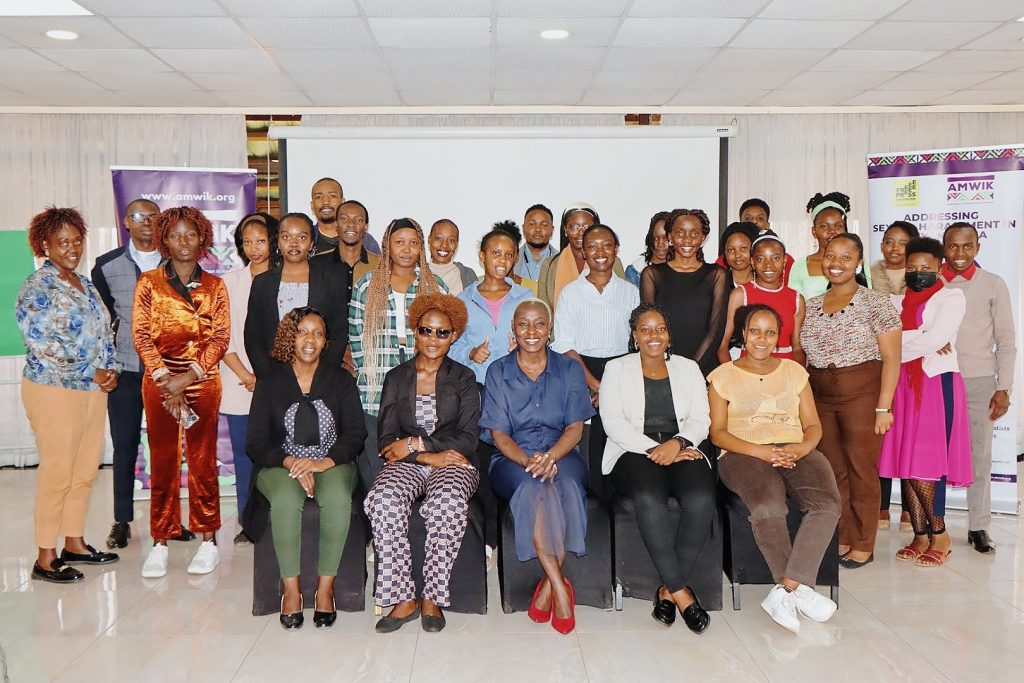
The Association of Media Women in Kenya (AMWIK) has once again demonstrated its commitment to promoting safe, inclusive, and gender-sensitive workspaces within Kenya’s media industry. AMWIK hosted a Psychosocial Awareness Training for Young Journalists at the Monarch Hotel, Nairobi, bringing together early-career journalists from various media houses and community radio stations.
The one-day workshop was a follow-up to AMWIK’s ongoing initiative on Sexual Harassment Policy Implementation in Media Houses, focusing on the link between psychosocial well-being and safe newsroom environments. The session acknowledged that while journalists play a critical role in shaping public discourse, they often face immense emotional and psychological pressures in their line of duty ; pressures that, if unaddressed, can affect both personal health and professional performance.
The workshop aimed to equip participants with knowledge and tools to manage stress, trauma, and workplace challenges while fostering resilience and peer support. Through interactive sessions, young journalists explored the realities of stress in the newsroom and learned how to identify its early signs including social withdrawal, irritability, and exhaustion.
Participants also engaged in practical exercises and reflective discussions on work-life balance, relaxation techniques, and trauma awareness. Special focus was given to Post-Traumatic Stress Disorder (PTSD) linked to sexual harassment and how the HEAL model can be used to support survivors of sexual and gender-based violence (SGBV) through empathy, listening, and validation.
The HEAL MODEL:
– Have resources to share.
– Educate yourself to become trauma-informed.
– Advocate for victims’ rights and protection.
– Listen without judgment or pressure.
-Learning Through Practice and Participation
Facilitated through a participatory approach, the training combined theory with hands-on exercises and peer reflection. Participants explored the 4A’s Model (Adapt, Avoid, Accept, Alter)and the STEPS approach (Say, Think, Explore, Pick) for problem-solving, and developed personal self-care plans focusing on mental, emotional, and social wellness.

The training reaffirmed that journalists’ well-being is not just personal — it’s professional. Participants emphasized that psychosocial health directly affects workplace productivity, ethical judgment, and the overall quality of journalism. Many expressed a desire for continued mentorship and peer support, particularly within community radio spaces where mental health resources are limited.
AMWIK Executive Director, Queenter Mbori, noted the need to take care of journalists by providing them with safe working spaces.
“In redefining newsroom safety, we also need to include emotional and mental well-being. By addressing issues such as trauma, stress management, and resilience, we can build a media community that not only reports on societal issues but also thrives within a supportive, inclusive, and mentally healthy environment.” She said.
Through such initiatives, AMWIK reaffirms its unwavering commitment to the holistic well-being of journalists reminding the media fraternity that safeguarding mental health is key to sustaining ethical, impactful journalism in Kenya and beyond.
By Joan Nyambura, AMWIK Project Assistant
